

In today’s fast world, managing emotions well is key. Mature emotions help us handle tough situations better. They make us more emotionally intelligent, which boosts our personal strength and relationships.
By controlling our emotions, we can deal with stress more easily. This leads to better mental health. Let’s dive into why mature emotions are so important for managing stress.
The Importance of Mature Emotions in Stressful Situations
Mature emotions are key in dealing with life’s tough times. A famous saying goes, “Ships don’t sink because of the water around them; ships sink because of the water that gets in them.” This shows how uncontrolled emotions can cause problems, just like water flooding a ship. Learning to manage your emotions is crucial for staying calm in hard times.
Emotions are linked to our survival, with both good and bad feelings guiding us. When we face stress, being able to handle our emotions shows our emotional smarts. This skill is vital for getting along with others and solving problems together. It helps us make smart choices and stay focused when things get tough.
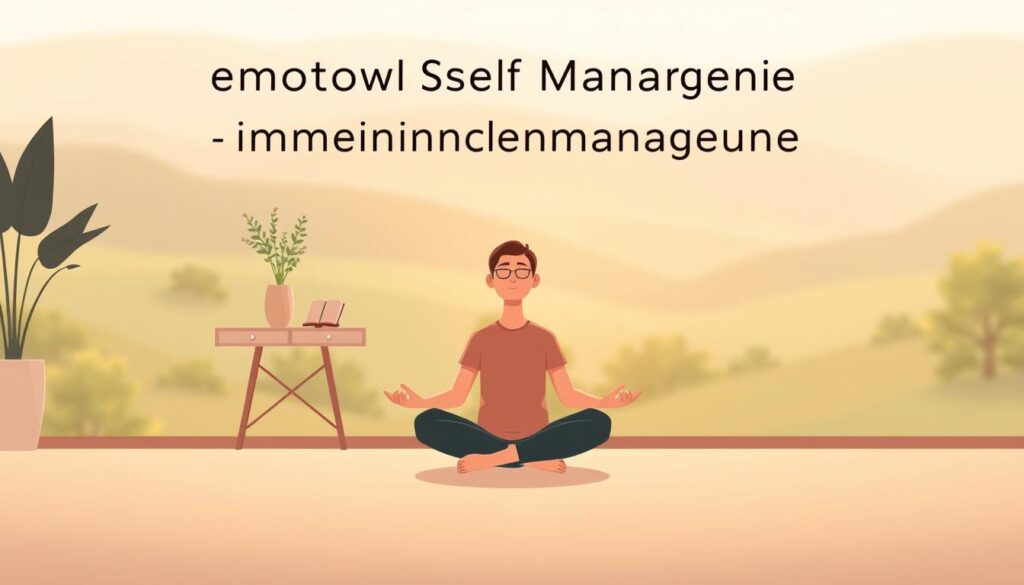
Strategies for Emotional Self-Management, Mindful Living, Emotional Intelligence, Control
To improve emotional self-management, we need practical strategies. Recognizing physical signs of stress is a key step. It acts as an early warning system. By paying attention to these signs, we can manage our emotions before they get out of hand.
Visualization is another helpful technique. Imagine peaceful places to calm down when you’re stressed. This can make a big difference in how you handle tough moments.
Keeping a journal is also important. Writing down how you feel helps you spot patterns and triggers. This self-reflection helps you understand your emotions better. It also helps you develop healthy ways to deal with them.
Accepting your emotions is crucial. Instead of hiding how you feel, it’s better to acknowledge them. This makes it easier to handle difficult situations.
Mindful living helps improve emotional intelligence. Activities like meditation and deep breathing help you stay calm. They also make you think more clearly in stressful times.
Having a plan for making decisions can also help. It helps you stay in control when unexpected things happen.
The Role of Self-Regulation in Emotional Control
Self-regulation is key to controlling emotions. It lets people understand their feelings and reactions. This is important because it helps avoid acting on impulse.
Knowing how emotions evolved helps us see why self-regulation is crucial. It helps manage emotions well, which affects how we interact with others.
Using techniques like deep breathing helps control emotions. It makes us calm down in tough situations. Growing emotional intelligence means knowing our feelings, what triggers them, and how to respond.
With better self-regulation, we can handle our emotions better. This skill helps us grow personally and succeed in relationships. It also improves our decision-making.
Emotional control through self-regulation is essential for good communication and teamwork. It’s important in both our personal and work lives.

Building Resilience Through Mindfulness and Self-Awareness
Resilience helps us deal with life’s ups and downs. Mindfulness and self-awareness boost emotional control. This makes us more stable, even when things get tough.
Mindfulness keeps us in the moment, helping us understand our feelings better. This is key to building resilience and keeping our emotions healthy over time.
Being in nature is great for reducing stress and for thinking deeply about our feelings. Keeping a mood journal helps us see how our emotions change. These steps help us accept our feelings, which is important for managing our emotions.
Sticking with mindfulness and self-awareness helps us find better ways to cope. These practices make us stronger, ready to tackle future challenges. Mindfulness and self-awareness improve how we handle emotions and help us bounce back from hard times.
